
How Dental Implant Crown Design Affects Function and Longevity in Raleigh, NC
Patients researching implants often focus on the implant itself, the post that sits in the jawbone. The crown attached to it matters just as much. It is the part you chew with, the part people see, and the part you clean every day.
Dental implant crown design affects appearance, chewing, bite contacts, gum contours, and cleaning access. A well-designed dental implant crown works with your neighboring teeth, your opposing teeth, and the gum tissue around it.
This guide covers crown anatomy, emergence profile, the abutment connection, bite alignment, crown materials, contacts with neighboring teeth, and long-term maintenance. If you’re considering dental implants in Raleigh, NC, or planning an implant crown, it helps to understand how the crown is designed to fit your mouth.
Why the Implant Crown Is More Than the Visible Part of a Dental Implant
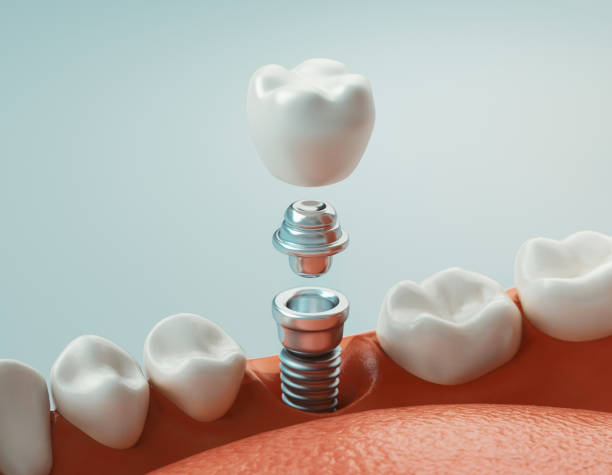
A complete implant has three main parts, and each has a different job.
How the Implant Fixture, Abutment, and Crown Work Together
The implant fixture is placed in the jawbone and acts as the root. The abutment connects the fixture to the restoration, though some restorative systems combine or modify this connection. The crown replaces the visible, functional part of the missing tooth.
These parts work as one system. A problem in one can affect how the others perform. Implant position guides the abutment, the abutment shapes the crown, and the crown’s bite, gum contour, and cleanability determine how well the restoration holds up long term.
What Makes an Implant Crown Different From a Crown on a Natural Tooth?
A crown on a natural tooth covers prepared tooth structure. That tooth is still held in place by the periodontal ligament, which provides some cushioning and sensory feedback.
An implant crown is supported by the implant and abutment instead, with no ligament involved. That changes how the crown is attached, how it receives pressure, and how its contours are designed around the gum tissue.
Why the Final Crown Should Be Considered Before Implant Placement
Modern implant planning often starts with the result. The dentist considers where the final crown needs to sit, then works backward to the ideal implant position. This is called restoration-driven planning.
When the crown comes first, the implant is more likely to support a natural shape, a comfortable bite, and good cleaning access. Our article on implant position planning explains this approach in more detail.
How Implant Crown Shape Affects Chewing and Everyday Function
An implant crown has to do the job of the tooth it replaces while fitting the bite you already have.
Why the Chewing Surface Must Match the Tooth’s Functional Role
Different teeth do different work. Molars grind food. Premolars help crush and chew. Front teeth bite into food and cut it.
An implant crown’s anatomy reflects that role. A molar crown usually has a broad chewing surface with defined cusps. A front tooth crown has a thinner biting edge shaped for cutting and appearance.
How Cusps, Grooves, and Contact Points Influence Implant Crown Function
Cusps are the raised points on a chewing surface. Grooves are the valleys between them that help food move during chewing. Occlusal contacts are the spots where the crown touches the opposing teeth, and proximal contacts are where it touches the teeth beside it.
Each feature affects how the crown chews, where force lands, and how food moves around it.
Why an Implant Crown Should Fit the Existing Bite
Your opposing teeth, jaw movements, and current bite contacts all shape how an implant crown’s chewing surface is designed. The crown needs to meet the opposing teeth in step with the rest of your bite, so it never becomes the first or heaviest contact. This is where crown design connects directly to implant biomechanics.
Why a Molar Implant Crown May Be Designed Differently From a Front Tooth Crown
A molar implant crown is designed mainly for chewing function and durability. A front tooth crown has to balance biting, jaw guidance, and how it looks in your smile.
Gum contour and tooth proportions matter more in front, while chewing surface and contact strength matter more in back. Our guide to front tooth and molar implants explains how planning differs by location.
What Is an Implant Crown Emergence Profile and Why Does It Matter?
Emergence profile is the shape of the crown as it rises out of the gum tissue. Patients rarely see it, but it is one of the most important parts of dental implant crown design.
How the Implant Crown Transitions Through the Gum Tissue
An implant fixture is usually narrower than the tooth it replaces. The abutment and crown have to widen from the implant’s platform to the full width of a natural tooth as they pass through the gum.
The peri-implant soft tissue, meaning the gum around the implant, wraps around that transition zone. Whether the restorative profile is straighter or more curved influences how the gum contour forms and how stable it stays.
Why Overcontoured Implant Crowns Can Be Difficult to Clean
A crown that bulges too much near the gumline can create areas a toothbrush or floss can’t reach well. Plaque can collect there, and plaque left in place may lead to inflammation of the surrounding tissue.
Research supports paying close attention to this. A review of emergence profiles found higher rates of peri-implantitis around restorations with a convex profile than around those with concave or straight profiles. The evidence is still limited, and contour is one factor among several, not a sole cause.
How Crown Contours Affect Gum Appearance Around Front Tooth Implants
In the smile zone, crown contours shape how the gums frame the tooth. Gingival symmetry with neighboring teeth, natural tooth proportions, and the small triangle of gum between teeth, called the papilla, all depend partly on crown shape.
These details matter most for patients whose gumline shows when they smile.
Why Soft-Tissue Health Should Influence Implant Crown Design
Implant gum health depends on access. An implant crown contour designed for cleaning gives you a better chance of removing plaque at home. It also lets your dental team monitor the tissue during checkups.
Why Bite Alignment Is Essential for Dental Implant Crown Longevity
The crown is where your bite meets the implant, so its alignment affects how long it holds up.
How the Implant Crown Receives Chewing Forces
When you chew, pressure lands on the crown first. It then travels through the abutment and connection into the implant and surrounding bone. The crown’s shape and contacts determine where that pressure starts.
Why a High Implant Crown Can Create Uneven Bite Contacts
Patients sometimes say a new crown feels “too high.” This usually means it touches before the surrounding teeth when you close. It can feel like biting on a small bump, and chewing on that side may be uncomfortable.
An early contact can add mechanical stress to the crown and its components. It doesn’t mean the implant will fail, but it does call for a professional occlusal assessment.
How Crown Anatomy Can Influence the Direction of Bite Forces
Steep cusps and contacts placed toward the edge of the chewing surface can push a crown sideways when you bite. Flatter cusps and centered contacts tend to direct force more along the implant’s length.
Dentists choose cusp design, contact position, and restorative contours to suit each bite. The goal is to limit unnecessary lateral forces without sacrificing chewing function.
Why Implant Crown Occlusion May Need Periodic Evaluation
Bite relationships change as natural teeth shift and wear. A crown that fit well on delivery day may need a small adjustment years later.
That’s why dentists check implant crown occlusion during routine visits. For more on how chewing pressure affects implants, see our article on dental implant bite forces.
How Implant Crown Materials Affect Strength, Appearance, and Maintenance
Choosing a crown material means balancing appearance, strength, available space, and each patient’s bite. No single material is right for every situation.
Zirconia Implant Crowns: Strength and Esthetic Considerations
Zirconia is a ceramic known for its strength and is widely used for implant crowns. Newer formulations offer more natural translucency than earlier versions.
Surface finishing matters too, since a well-polished crown is smoother against opposing teeth.
Other Ceramic Implant Crown Options
Other ceramic systems may be considered depending on the tooth’s location, esthetic needs, and restorative design. Some offer more translucency for front teeth, while others are layered for closer shade matching.
Why Crown Material Alone Does Not Determine Implant Restoration Longevity
A strong material can’t make up for poor design. Restoration performance depends on the material, the crown’s shape, the bite, the connection to the implant, and how well the crown is maintained. All five work together.
How Teeth Grinding Can Influence Crown Material and Design Choices
Teeth grinding adds extra force to an implant crown. For patients who grind, dentists may favor stronger materials, adjust the crown’s shape to reduce heavy contacts, or recommend a night guard.
These choices can help manage the risk, though no material or appliance makes a crown immune to damage.
Screw-Retained vs Cement-Retained Implant Crowns: Why Attachment Design Matters
Implant crowns are usually attached in one of two ways. Neither is right for every case. The choice depends on implant position, restorative space, esthetic needs, and other clinical factors.
How Screw-Retained Implant Crowns Are Attached
A screw-retained crown is held to the implant by a small prosthetic screw. The screw is reached through an access opening in the crown, which is then sealed with tooth-colored filling material.
This design is often retrievable. A dentist can remove the crown without cutting it off, which may simplify future maintenance.
How Cement-Retained Implant Crowns Are Attached
A cement-retained crown is bonded onto an abutment with dental cement, much like a crown on a natural tooth. This design avoids a visible access opening, which can help in certain esthetic situations.
Excess cement left below the gumline is a recognized concern, so careful technique and cleanup are important.
How Crown Retention Can Affect Future Maintenance and Repair
Retention design affects how easily a dentist can reach the components underneath and repair or replace parts later. Some designs make that work simpler, but not every repair is easy with either approach. Your dentist will recommend the design that best fits your situation.
Why Contacts With Neighboring Teeth Matter for Implant Crown Design
An implant crown has to fit into your existing arch. That includes how it touches the teeth beside it and how easily you can clean between them.
What Are Interproximal Contacts Around an Implant Crown?
Interproximal contacts are the points where the sides of neighboring teeth touch. Around an implant crown, these contacts help keep food from wedging between teeth and keep the arch working as a unit.
A contact that is too loose may trap food. One that is too tight can make flossing difficult.
Why Food Trapping Around an Implant Crown Should Be Evaluated
Food can get trapped around an implant crown for several reasons. An open contact, the crown’s contour, natural tooth movement over time, and the shape of the surrounding gum can each play a role.
Food trapping doesn’t always mean the crown is defective. It does deserve an evaluation, since trapped food can irritate the tissue around the implant.
How Crown Shape Can Support Better Daily Cleaning
A well-shaped crown makes daily care more practical. Accessible contours allow brushing along the gumline. Appropriate contacts let floss or interdental brushes pass through. Smooth surfaces make professional maintenance easier.
How Implant Crown Design Changes for Single Tooth, Multiple, and Full Arch Restorations
The principles of implant crown design apply across all implant treatments, but they look different as the restoration gets larger.
Single Tooth Implant Crowns Must Match the Surrounding Teeth
A single tooth implant in Raleigh has to blend in with the teeth around it. A well-planned implant crown in Raleigh matches its neighbors in shape, contact points, bite, gum contours, and esthetics.
Multiple Implant Restorations Require Coordinated Prosthetic Design
Multiple implants may support separate crowns or a connected restoration, such as an implant-supported bridge. Either way, the design is coordinated.
Prosthetic connections, cleaning access under and between units, and occlusal contacts across the span all need to work together.
Full Arch Dental Implants Use a Different Restoration Design Than Single Crowns
Full arch dental implants in Raleigh, NC use a connected prosthesis rather than a row of independent crowns. The design accounts for arch form, implant distribution, the bite, and how the prosthesis will be cleaned.
Some full arch restorations in Raleigh also include artificial gum material where bone and tissue have been lost. This helps restore appearance and lip support.
Why All-on-4 Restorations Need Coordinated Tooth Shape, Bite, and Cleaning Access
All-on-4 restorations, which Williams, Daily & Frazier Dental provides, replace a full arch of teeth on four implants. The prosthesis has to coordinate tooth shape, bite, and cleaning access across the whole arch, including a cleanable underside.
To learn how full-arch cases are planned, read about full-arch treatment planning.
How Digital Planning Helps Dentists Design Implant Crowns in Raleigh, NC
Digital records give dentists a detailed look at tooth shape, tooth position, and bite relationships before a crown is made, often starting at a dental implant consultation in Raleigh, NC.
How Digital Impressions Capture Tooth Shape and Restorative Space
Our team uses digital impressions, which capture detailed scans in minutes without traditional impression material. A scan or conventional impression records the implant position, the shape of neighboring teeth, the gum contours, and the space available for the crown.
Why Implant Position and Crown Design Must Be Planned Together
Digital records let the implant position and the planned crown be reviewed in one plan. Because the implant’s angle sets the restorative axis, seeing both together helps shape the crown’s contours and emergence.
How Bite Records Help Shape the Final Implant Restoration
Bite records show how your upper and lower teeth meet and how your jaw moves. They guide where contacts land on the new crown’s chewing surface, so the crown fits your bite from the start.
Why Final Crown Evaluation Includes More Than Appearance
A crown can look right and still need adjustment. Final evaluation typically covers fit, contacts with neighboring teeth, occlusion, contours, hygiene access, and comfort. These checks are a routine part of implant restoration in Raleigh, NC.
Common Implant Crown Problems and What They May Reveal About Restoration Design
Implant crown problems can have several causes, and each one deserves a professional evaluation. The notes below are for awareness, not do-it-yourself troubleshooting.
Food Getting Stuck Around an Implant Crown
Food that regularly catches around an implant crown may point to an open contact or contour issue. Your dentist can check both.
An Implant Crown That Feels Too High or Uncomfortable
A crown that feels high or sore when you bite calls for a bite assessment, where your dentist can check and adjust the contacts.
Chipped or Fractured Implant Crown Material
Chipping or fracture can come from heavy chewing forces, grinding, material choice, or crown design. Many chipped crowns can be repaired or replaced without affecting the implant.
A Loose Implant Crown or Abutment
A loose crown or abutment usually involves the prosthetic parts, such as a loosened screw. That is different from the implant fixture itself moving. Contact your dentist promptly so the cause can be identified.
Redness or Bleeding Around an Implant Crown
Redness or bleeding around an implant crown may signal inflammation of the peri-implant tissue, and plaque buildup is a common contributor. It shouldn’t automatically be blamed on crown design. A professional evaluation can identify the actual cause.
Why Implant Crown Maintenance Is Part of Long-Term Implant Success
Implant restoration longevity depends on more than the initial crown design. Patient-specific factors such as grinding, smoking, and overall health also influence how well a crown holds up.
Cleaning Around the Implant Crown and Gumline
Brush along the gumline around the implant crown, where plaque tends to collect. Floss, interdental brushes, or a water flosser can help clean between teeth. A crown designed with accessible contours makes this routine easier.
Why Implant Crowns Need Professional Monitoring
During checkups, dentists examine the gum tissue around the implant, look for wear or chips, check contacts with neighboring teeth, and evaluate the bite. They may also check the prosthetic components for signs of loosening.
When an Implant Crown May Need Repair or Replacement
Implant crowns are restorations, and restorations can wear, chip, or eventually need replacement. In many cases, the crown can be repaired or replaced while the implant stays in place. Replacing a crown is a much smaller procedure than replacing the implant fixture.
Common Misconceptions About Dental Implant Crown Design
“All Implant Crowns Are Designed the Same Way”
Every implant crown is designed for a specific tooth and a specific mouth. A molar crown needs a broad chewing surface for grinding, while a front tooth crown needs a thinner edge and careful attention to gum contours and appearance. The crown’s size, cusp shape, contacts, and emergence profile all change with tooth location, bite, and the surrounding teeth.
“The Implant Fixture Matters More Than the Crown”
The fixture and the crown function as one system. A stable implant with a poorly designed crown can still lead to food trapping, bite problems, or gum irritation. Long-term success depends on the fixture, abutment, and crown working together, so neither part can make up for weaknesses in the other.
“If the Crown Looks Natural, It Must Be Designed Correctly”
A natural appearance is only one measure. A crown can look great and still have a high bite, a loose contact, or contours that are hard to clean near the gumline. Some of these issues only show up during chewing or cleaning, so evaluation checks fit and function along with appearance.
“Zirconia Crowns Cannot Break”
Zirconia is known for its strength, which is one reason it is widely used for implant crowns. Still, no material is unbreakable. Heavy grinding, a very thin crown, or an uneven bite can lead to chipping or fracture. Material strength is only one part of crown longevity, alongside design, bite, and maintenance.
“A Dental Implant Crown Never Needs Replacement”
An implant crown is a restoration, and like any restoration, it can wear, chip, or loosen over the years. Some crowns last a very long time, while others need repair sooner depending on bite, habits, and care. Routine visits help catch small problems early, and replacing a crown often doesn’t require replacing the implant.
“Bleeding Around an Implant Crown Is Always Caused by the Crown Shape”
Crown contour can make cleaning harder, but bleeding around an implant has several possible causes. Plaque buildup, gaps in home care, smoking, systemic health conditions, and the condition of the surrounding tissue can all contribute. A professional evaluation helps identify what is actually causing the inflammation before treatment is planned.
Frequently Asked Questions About Dental Implant Crown Design
Why does dental implant crown design matter?
Crown design determines how your implant chews, looks, meets your bite, and cleans. A well-designed crown shares chewing forces with your other teeth, supports healthy gum contours, and allows plaque removal along the gumline. Poor design can lead to food trapping, bite discomfort, or gum irritation even when the implant itself is stable.
How is an implant crown different from a regular dental crown?
A regular crown covers a prepared natural tooth, which is held in place by the periodontal ligament. An implant crown is supported by an implant and abutment in the jawbone instead. It may be screwed or cemented in place, and it is shaped to widen from the narrower implant to full tooth width.
What is an implant crown emergence profile?
The emergence profile is the shape of the crown as it rises out of the gum tissue. It covers the transition from the narrower implant to the full width of the tooth. This shape influences gum contours, appearance, and how easily plaque can be cleaned along the gumline.
Can implant crown shape affect gum health?
Yes. A crown that bulges too much near the gumline can be harder to clean, allowing plaque to collect. Over time, that may contribute to inflammation in the surrounding tissue. Crown shape is one factor among several, alongside daily hygiene, professional cleanings, and overall health.
Can a poorly fitting implant crown cause food trapping?
It can. An open contact or a contour that leaves a gap may let food wedge between the implant crown and nearby teeth. Food trapping can also come from natural tooth movement over time. If it happens regularly, your dentist can evaluate the contacts and contours.
What is the best material for a dental implant crown?
There is no single best material for every patient. Zirconia is a common choice for its strength, while other ceramics may be preferred for certain front teeth. Your dentist considers the tooth’s location, your bite, esthetic goals, and available space before recommending a material.
Is a screw-retained implant crown better than a cement-retained crown?
Neither is better in every case. Screw-retained crowns are often easier to remove for maintenance or repair. Cement-retained crowns avoid a visible access opening, but excess cement must be carefully managed. The right choice depends on implant position, available space, esthetics, and other clinical factors.
Can an implant crown be replaced without replacing the implant?
Often, yes. If the implant fixture and its components are healthy and stable, a damaged or worn crown can usually be replaced on its own. Your dentist will evaluate the implant, abutment, and surrounding tissue first to confirm that replacing the crown alone is appropriate.
Why does my dental implant crown feel different when biting?
Implants don’t have the periodontal ligament that natural teeth have, so biting can feel slightly different. If the crown feels high, sore, or touches before your other teeth, contact your dentist. A bite evaluation can show whether the contacts need adjustment.
How long do dental implant crowns last?
Implant crown lifespan varies from patient to patient. Material, bite, grinding habits, home care, and regular checkups all influence how long a crown lasts. Many crowns serve patients for years, and when one does wear out, it can often be replaced without replacing the implant.
How are implant crowns designed for front teeth versus molars?
Front tooth implant crowns prioritize appearance, gum contours, and a biting edge that helps guide jaw movement. Molar implant crowns prioritize a broad, durable chewing surface that handles heavier grinding forces. Both are shaped to fit the patient’s bite and neighboring teeth.
Does All-on-4 use individual implant crowns?
Usually not. All-on-4 typically uses one connected full-arch prosthesis supported by four implants, rather than separate crowns on each implant. The teeth are shaped as part of a single restoration designed for appearance, bite, and cleaning access across the whole arch.
Personalized Dental Implant Crown Restoration in Raleigh, NC
Successful implant restoration planning looks at the whole picture. That includes the position of the implant, the shape of the replacement tooth, bite alignment, gum contours, crown material, cleaning access, and long-term maintenance.
At Williams, Daily & Frazier Dental, our team places and restores implants with each of these factors in mind. If you’re planning an implant crown or have questions about an existing restoration, schedule an implant restoration evaluation in Raleigh, NC.

